Artificial Intelligence: Between Profit and Disaster

We are on the verge of a new era where artificial intelligence promises unprecedented progress. But at what cost? The race for technological supremacy could be disastrous if profit takes precedence over the common good. It's time to think about the consequences.
Unconditional Income in the Age of Automation: Reality or Utopia?
With the development of Artificial Intelligence and Increase Automation in production processes, the question of unconditional income is becoming more and more relevant. In a world where machines can perform tasks faster and cheaper than humans, there is a threat Unemployment. Robotization and GenAI have already begun to displace people from many industries, creating Ethical Challenges and social tensions.
Can Universal Unconditional Income (UNHC) become a solution? Some experts believe that it can eliminate poverty and create conditions for a more equal distribution of wealth. However, opponents argue that this is a utopia that will lead to Genocide initiative and work ethic.
As long as governments and bigtech Companies such as NvidiaAnalyze Risks and opportunities, it is important to understand that the implementation of Unconditional Income requires careful study and experimentation. This is not just a financial tool, but a deep social restructuring that will affect all aspects of our lives.
Experiments with UBI have already been conducted in different countries, and the results are intriguing, to say the least.
Take Australia during the pandemic. The JobKeeper and Coronavirus Supplement programs have actually become an analogue of WBD, when more than 40% of the adult population received regular payments. And what do you think? The poverty rate among recipients of unemployment benefits has fallen from 67% to 7%! This is serious.
What about Kenya, where Give Directly is conducting a large-scale experiment involving 20,000 people? A decrease in infant mortality, a reduction in domestic violence, and an increase in economic activity – all this suggests that UBI can be a powerful tool for solving social problems.
Of course, this is not a panacea, but the facts speak for themselves. UBI programs around the world range from $500 to $1,500 per month, and experts predict the potential for payouts of up to $10,000 per month due to accelerating economic growth using AI.
The Price of Progress: When Ambition Overshadows Reason
I've seen a world obsessed with speed. The speed of profit, the speed of technological progress. Artificial intelligence is the new top of this race.
In 2025, Nvidia, the AI giant, is soaring in the stock market, and the U.S. president is investing billions in energy infrastructure to get ahead of China. But there is a dark side behind this shine.
The huge energy consumption of AI creates an energy crisis, and the race to create artificial superintelligence (ASI) frightens with its consequences.
History knows examples when ambition overshadowed reason, and Technological progress led to undesirable consequences. We must remember that technological progress without due responsibility can lead to tragedy. Poison gases, the atomic bomb, the greenhouse effect – history repeats itself when the thirst for power and profit overshadows common sense.
Current Race to Craft superintelligence and approaching Singularity carries risks. We may encounter Threat, if we do not take into account the long-term consequences. Ambition without an awareness of the risks can lead to disastrous results.
It is important to ask questions: who are we counting on? What price are we willing to pay for progress? The answers to these questions will determine not only the prospects for the development of AI, but also the future of humanity.
The Energy Crisis: The Price of AI Development
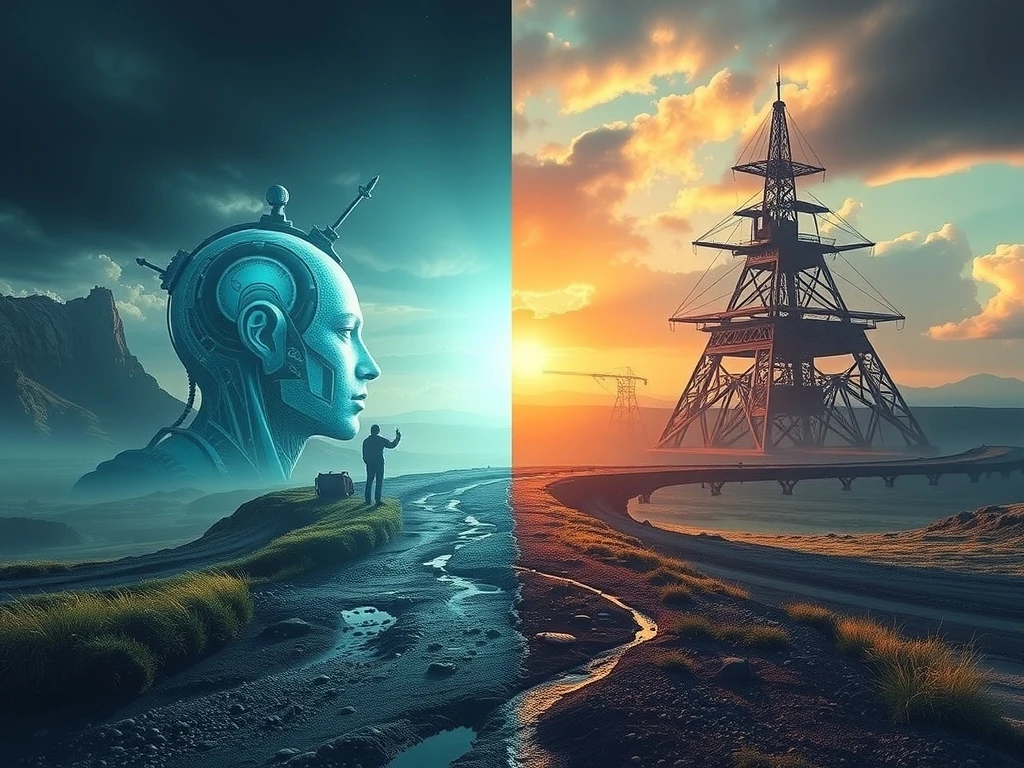
As you grow Artificial Intelligence and Technologies of the future, the world is facing new challenges related to energy needs. Big Data and the computing power required to AI-systems, create significant pressure on the infrastructure. BigTech Companies such as Nvidia, invest billions in Energy Projectsto meet these needs.
- In 2024-2025, global energy consumption increased significantly (an increase of 4-4.3%), and one of the key reasons was artificial intelligence: AI's demand for electricity is comparable to the consumption of entire countries, for example, Japan or the Netherlands.
- In 2022, data centers, AI, and cryptocurrency mining accounted for 2% of global energy (~460 TWh), an annual growth of 12%.
- Currently, AI systems alone account for up to 20% of data center energy consumption, and by the end of 2025, their share may grow to 49%.
Gartner predicts that by 2027, up to 40% of AI data centers could face energy shortages. By this time, AI servers will need an additional 500 TWh, which is 2.6 times more than in 2023 (for comparison: the entire energy sector in Russia is 1151 TWh/year).
Nvidia will invest up to $100 billion in the development of OpenAI's AI infrastructure and the construction of data centers with a capacity of 10 GW (the first stage on the Vera Rubin platform is the second half of 2026). At the same time, it costs $50-60 billion to build a 1 GW data center, and it is expected that such projects will increase the energy load and accelerate the transition of leading companies (for example, Microsoft and Amazon Web Services) to nuclear energy facilities and more environmentally friendly technologies.
Challenges and risks: the surge in demand for electricity for AI has already sparked plans to build new gas-fired power plants and resume nuclear projects in the United States and other countries. IDC and IEA believe that high electricity prices will continue for years to come, and data centers are becoming more expensive to operate, especially due to stringent environmental regulations and extreme weather.
The main dilemma: how to balance the rapid growth of AI and the preservation of the planet? The accelerated development of technology requires either a radical increase in the energy efficiency of AI computing, or a transition to new energy sources.
Robotization and Jobs: How Technology Will Change the Labor Market
Integration Artificial Intelligence and robotization in business processes is changing the labor market faster than ever. Technology of the future, created by Nvidia and others BigTech companies are rapidly changing the way we look at Unemployment and Automation.
According to the latest report of the International Labor Organization (ILO), a quarter of all jobs in the world in the coming years will be changed by artificial intelligence. In developed countries, up to 34% of professions will be transformed, in lower-middle-income countries - up to 20%.
Some occupations are disappearing, raising concerns about rising unemployment. It is predicted that up to 85 million old jobs related to routine tasks (office workers, cashiers, support employees, production specialties) will be reduced.
"Paradox of Innovation": Fears of mass unemployment are combined with real growth in AI-related jobs, especially in developing countries and regions with digital transformation. Up to 97 million new professions will appear - related to AI management, data analysis, model training, digital professions and working with neural networks. By 2030, up to 38% of professions can be automated with a high probability.
The question is how quickly society will be able to adapt to these changes and what measures will be taken to retrain the workforce.
There is an increase in demand for AI skills: AI-related jobs are growing 3.5 times faster than conventional positions, and salaries in this field can be up to 25% higher compared to the market. The "sectors of knowledge" are changing most actively - IT, finance, consulting, information services. In the EU, there is a noticeable increase in big data and AI specialists.
Companies and government agencies must work together to create an enabling environment for a sustainable transition. Retraining is key: more than 70% of the world's workers will need to retrain to make their skills relevant to the future of work. 65-77% of employers are already implementing retraining of employees to work with AI technologies and neural networks.
Trends for 2026: HR and business process automation, personalization, rapid growth in digital employment, IoT and big data, and hybrid cloud platforms. Not all companies develop AI themselves — many buy ready-made solutions, and you can now learn the basic skills of working with neural networks on your own.
By the beginning of 2026, robotization will occupy more than half of the work tasks; AI will affect 40% of jobs worldwide
Without active retraining and adaptation, technological progress can exacerbate inequality and give rise to new social conflicts. But in the long run, the AI labor market is becoming more flexible, creative, digital, and "hybrid" (human+machine).
The Shadow of the Past: Lessons from History and the Risks of AI
History is a cruel teacher. It teaches us that Technologycreated with good intentions can lead to unintended consequences.
We created the atomic bomb to end the war, and we almost destroyed the world. We used poison gas to defeat the enemy, and we poisoned ourselves. Greenhouse gas emissions, designed to provide comfort, are now threatening our planet.
Artificial intelligence – a new weapon in the hands of humanity. He can decide Global Challenges, improve the quality of life, but it can also destroy us. Concerns about AI are well-founded, given our fallibility and greed.
Today, when Nvidia and other giants are investing in AI, it's important to keep in mind Risks Create superintelligence or approximation Singularity. These technologies can lead to global catastropheif they are not monitored.
We must learn from the mistakes of the past to ensure prospects for the development of AI, which will not only promote Technological progress, but also to preserve our planet for future generations. This balance is one of the largest ethical challenges of our time.
What is at stake? The Future of Humanity
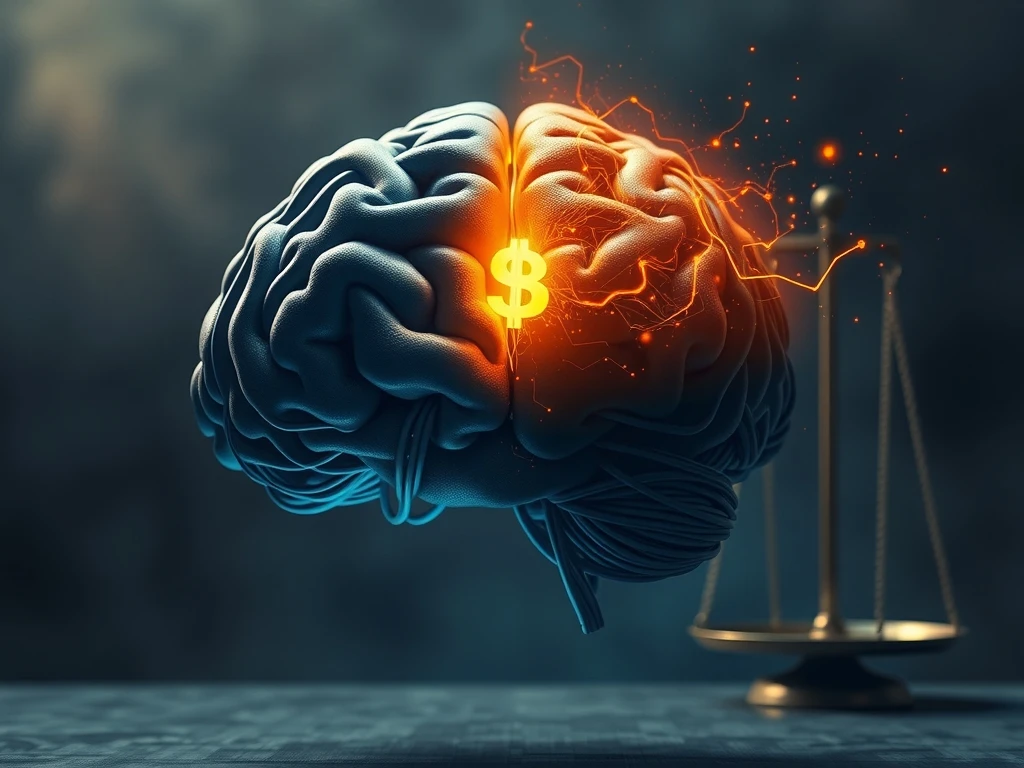
We are at a crossroads. One path leads to light, to solving global problems and improving the quality of life. The other – to darkness, to catastrophe and the death of humanity. The choice is ours. AI can be both humanity's greatest achievement and its worst nightmare. It all depends on how we approach this challenge.
So long Nvidia and others BigTech Companies are racing for technological superiority, societies and governments should focus on Ethics and social impact. In our quest for Progress We must not forget about human values.
What will be the role AI in our Future? How to avoid global catastrophe and direct development towards Common Good? The answers to these questions depend on our ability to learn, adapt, and act responsibly in order to Technologies of the future have become our ally, not a threat.
Questions to Ponder
- What is more important: profit or the common good?
- Are we willing to sacrifice the future for technological superiority?
- How can we ensure that AI serves the interests of society as a whole, not just a few?

Time-Burning Lies: Why Neural Networks Hallucinate Through Links and How NotebookLM Saves From Fakes
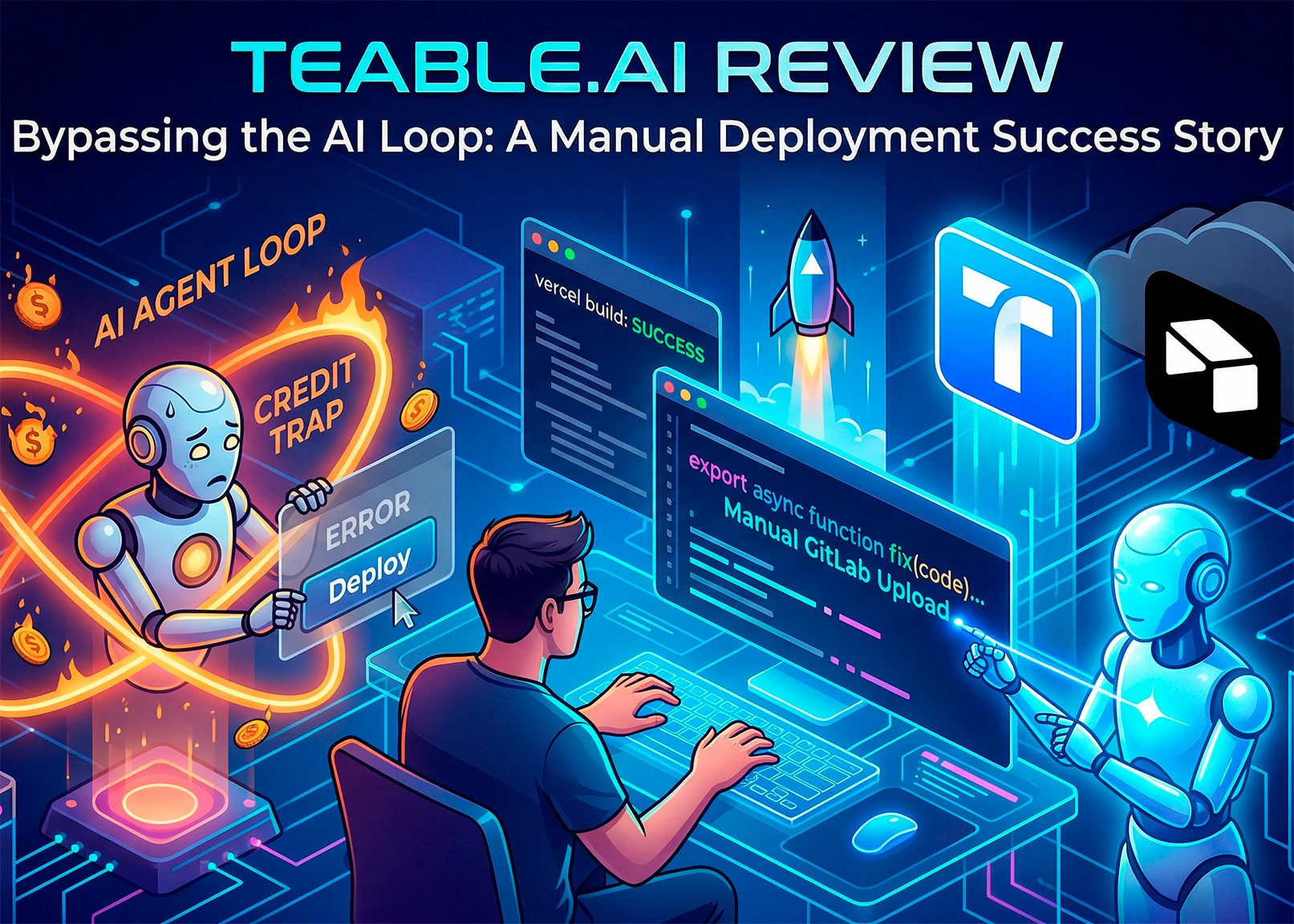
Teable.ai Review: A Powerful AI Alternative to Airtable and App Builder Credit Trap

🎙️ How To Create The Perfect AI Voice Clone In 2026 (And Get Away From Subscriptions For Good)