Artificial Intelligence: Superhero Costume or New Atomic Bomb?

Introduction: "Super Power at Your Fingertips"
Every third coffee from an IT specialist is now drunk in the company of AI. We live in an era where artificial intelligence analyzes our posts, generates music, sells paintings, and has already learned how to answer your mother-in-law's WhatsApp calls. Welcome to 2026 – right into the time loop between innovation and paranoia: are you sure this is written by a person, not ChatGPT?
AI in Business: New Opportunities and Breakthroughs
AI is no longer a luxury of top companies, but a must-have even for the inventors of mango dumplings. Last year alone, the use of AI services made it possible to reduce costs by an average of 14% and speed up the execution of business processes by 40% (AI Index 2025). Chatbots communicate with customers without fatigue and interruptions, Sora and ChatGPT respond to requests instantly, and synthetic data is a new type of mineral of the XXI century.
Real-life example: Nutella has launched an AI campaign to personalize jars – millions of unique designs, plus a 10% increase in sales in Europe.
Artists, marketers, advertising agencies, SMM specialists, entrepreneurs, contemporary art collectors, teachers — everyone will find their interest in this wave of AI creativity.
Synthetic data is becoming the new oil of the digital economy, allowing businesses to analyze large amounts of information without compromising privacy. Such data enables companies to accurately predict customer needs and offer personalized solutions. Interestingly, some startups are already experimenting with content generation, using AI to create unique texts and visuals, which opens up new horizons in marketing and advertising.
However, amid all these possibilities, it is important to keep in mind the ethics of AI and the risks associated with its use. In many ways, it depends on how businesses use AI whether it will become a tool for progress or a cause of new challenges. Are you ready to be a part of this business revolution?
Creativity with AI: How Neural Networks Are Changing Art and Marketing
In the age of artificial intelligence, creativity is reaching a new level. Neural networks not only inspire artists and designers, but also actively participate in the process of creating art. From generating content to creating visuals, the possibilities seem endless. Synthetic data and AI ethics are becoming key topics discussed at forums and conferences, because these are the aspects that determine the future of creative industries.
- In 2025, about 29% of digital artists are using AI to create, and up to 53% find such technologies useful in their work.
- AI art already occupies 5% of the contemporary art market, and the number of AI art exhibitions has grown by 25% in three years.
- The AI art segment reached almost $300 million in 2023 and may grow to $8.6 billion in the next 10 years.
An example is also the use of AI in marketing: companies are actively using neural networks to analyze consumer preferences and create personalized content. Tools like Sora and ChatGPT provide the ability to respond quickly and efficiently to user requests, improving customer experience and engagement.
Large brands (e.g., Nutella, H&M, Yum Brands) are implementing large-scale campaigns based on neural networks, creating millions of unique designs and avatars, as well as increasing customer retention through personalization.
So, can we say that AI will replace human creativity? Rather, it will be an important complement to it, providing new tools and expanding the horizons of what is possible. Be that as it may, it's important to keep in mind the ethical aspects of using AI to avoid turning creativity into a mass template factory. Do you think we are ready for this creative explosion?
Education and AI: Prospects and Changes in Education
Artificial intelligence is rapidly changing the face of traditional education. With the advent of content generation and ChatGPT, learning is becoming more interactive and accessible. Neural networks help teachers create personalized programs that take into account the abilities and interests of each student. This allows not only to increase the level of knowledge, but also to motivate students for further learning.
In the United States, the trend for the introduction of artificial intelligence in education is gaining momentum. In some schools, such as Alpha School in Austin, Texas, AI is already managing the learning process, tailoring programs to each student. Teachers turn into "mentors" who motivate children, rather than pass on knowledge. All this, of course, costs a lot of money - up to $ 40,000 a year per student.
- Fact: 72% of US students already use AI services for adaptive learning and exams.
The prospects for AI in education also concern new professions in 2025, which will be in demand in the future. AI and data scientists will become an integral part of the educational process, helping institutions use technology to improve the efficiency and quality of learning.
However, despite all the benefits, the ethics of AI in education remains a hot topic. We must ensure that technology is used for the benefit of society and does not infringe on students' rights to privacy and fairness. Is your school ready for this transformation?
The Future of Work: Is AI Taking Jobs or Giving New Jobs?
Experts predict that by 2030, 85 million professions will disappear, but 97 million new ones will appear, mainly related to AI management, ethics, and model training.
- Examples of professions in 2025: synthetic data operator, personal AI coach, ethical algorithm auditor.
Synthetic data and content generation are becoming the basis for creating new business models and revenue streams. AI and data analytics specialists will be an important part of the team, helping companies use technology to increase profits and efficiency.
Real case: Replacing 20% of routine tasks with AI increased companies' profits by 8% per year on average.
At the same time, it is important to keep in mind the ethics of AI and the risks associated with its use in order to avoid negative impacts on society.
The question that each of us faces is: are you ready to adapt to this new reality and use the power of AI for personal and professional growth? Perhaps you will be the one who will open up new horizons in the world of technology and business. Ready to take on the challenge?
The dark side of AI: a superhero costume or an atomic button?
The ethics of AI are increasingly central to discussions about the future of technology. Indeed, the impact of artificial intelligence on humanity raises many questions that determine whether AI will become our assistant or enemy. The risks of AI include aspects such as the creation of fake news and synthetic data that can be used to manipulate public opinion and undermine trust in information.
Alexis Bonnell from OpenAI warns of possible threats and emphasizes the importance of the ethical component in the development and application of AI. Bonnell, speaking at the Devex Impact House at the UN General Assembly, stressed that the key question is not the capabilities of AI per se, but what impact it will have on humanity. Her metaphor of a "superhero costume" turned out to be very accurate.
The question is not what this "suit" can do, but what we will become by wearing it. How will we use this power? Will we be superheroes solving global problems, or villains using AI for their own selfish purposes?
Society must ask itself: are we ready for such a powerful tool if we are not sure of its consequences?
Five key ethical issues for AI in 2025 and 2026:
- Algorithmic bias and discrimination
- Deepfake and Scams
- Transparency and black box control
- The environmental footprint of the AI industry
- Lack of ethically trained professionals and frameworks
These challenges require developers, users, and legislators to work together to create safe and ethical technologies.
Legal novelty: The European "AI Act" requires labeling and training transparency of all AI systems, up to local bots on corporate data dumps.
The main philosophical question is: who is responsible – the encoder, the neural network or the kettle in the kitchen?
Conclusions: Who will wear the costume - a hero or a villain?
AI has already transformed your correspondence, news, and even your wardrobe. Your next choice is to become a superhero who rationally combines the human approach with the power of algorithms, or stay away with a critical comment under this post. Remember: artificial intelligence does not do good or evil – it is a tool, and the responsibility is always on a person.
Your move – will you observe or become the creator of a new AI era? Write comments, share on social networks and... Let neural networks discuss your memes!
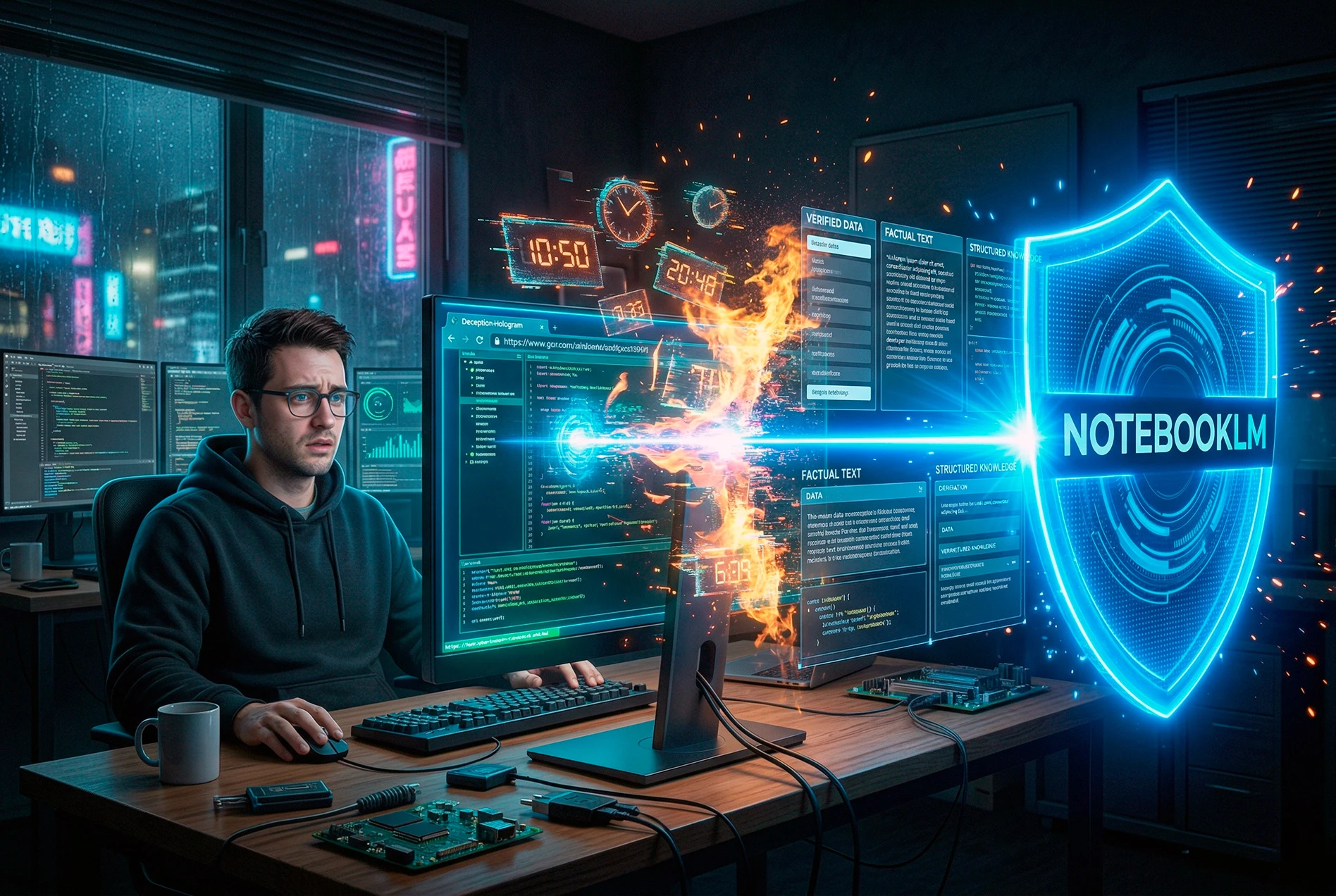
Time-Burning Lies: Why Neural Networks Hallucinate Through Links and How NotebookLM Saves From Fakes
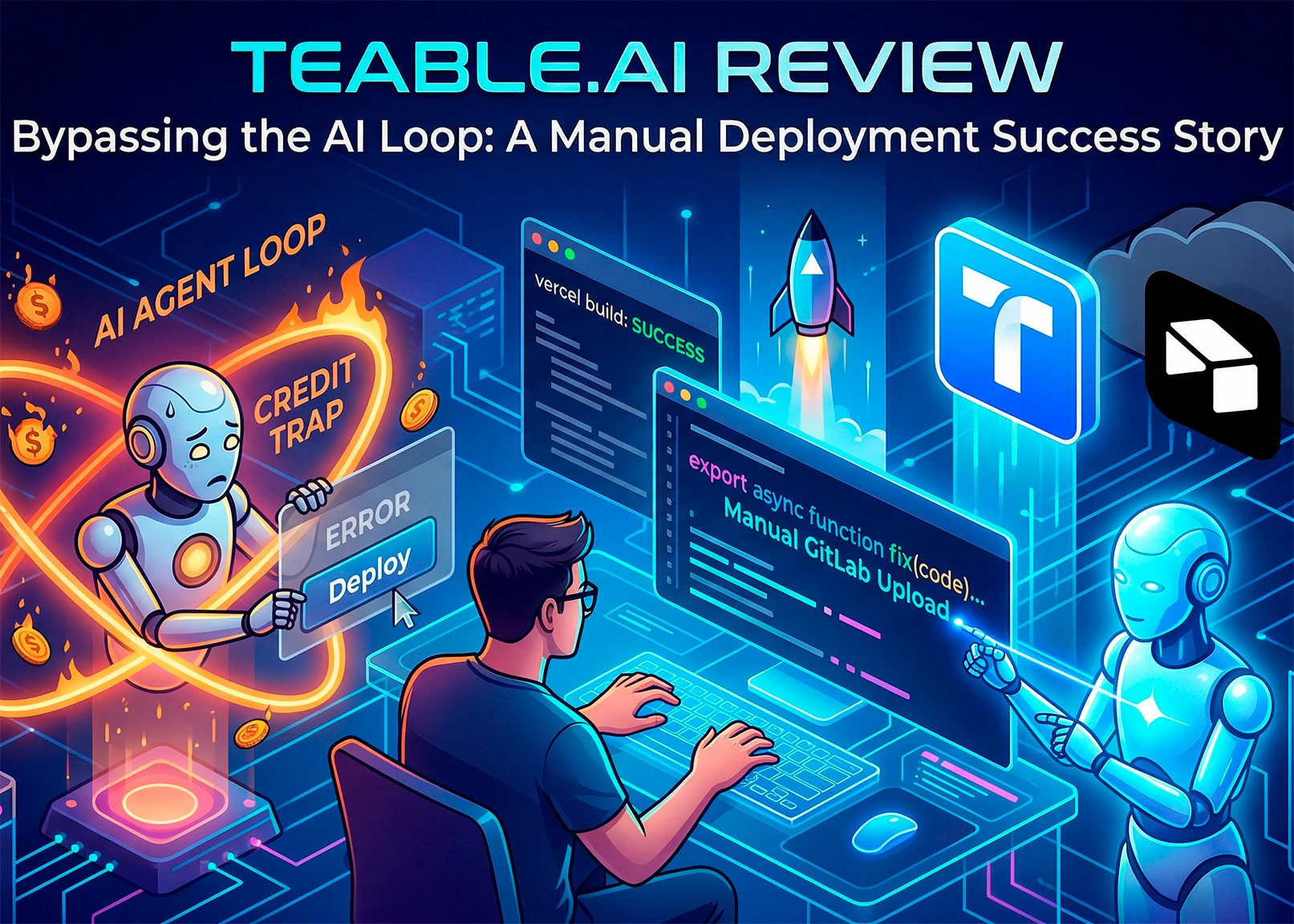
Teable.ai Review: A Powerful AI Alternative to Airtable and App Builder Credit Trap
🎙️ How To Create The Perfect AI Voice Clone In 2026 (And Get Away From Subscriptions For Good)